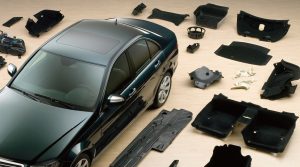
In the production process of automobile plastic injection, affected by many factors such as automobile mould precision and injection moulding process parameters, various injection defects are easy to occur. Among them, tiger stripes, white fog and weld lines on interior parts are the most common. These defects not only affect the appearance texture of automobile parts, but also may reduce the strength and service life of parts, which do not meet the strict standards of automobile production. Therefore, accurately identifying such defects and taking effective solutions is an indispensable link in the injection production of automobile parts and the key to ensuring product quality.
1. Common Injection Defects and Solutions
Tiger stripes: They often appear on the surface of automobile interior parts, showing irregular lines. Solution: Optimize injection temperature and pressure, adjust melt flow speed, clean impurities in the mould cavity, and ensure the mould surface is smooth.
White fog: A fuzzy white fog mark appears on the surface of interior parts, affecting the appearance. Solution: Choose suitable injection raw materials, dry the raw materials to remove moisture, and adjust the mould cooling system to avoid uneven cooling of the melt.
Weld lines: Obvious weld marks appear on the surface of parts, which may reduce structural strength. Solution: Optimize mould gate design, increase melt temperature, improve injection pressure, and reduce the docking gap after melt shunting.
2. Core Significance of Defect Prevention and Control
Solving automobile plastic injection defects can not only improve the appearance quality and structural stability of automobile parts, but also reduce production rework loss and production costs, ensure that automobile parts meet the whole vehicle assembly standards, and promote the standardized and high-quality development of the automobile injection moulding industry.