
About Us

About Us
Sino Auto Mould &. Moulding One-stop Service
SINO AUTO MOULD & MOLDING One-stop Service represents the core business division of SINO Group, built on over 20 years in the automotive manufacturing sector. Leveraging a global R&D system, full-process intelligent manufacturing capabilities, and stringent quality control standards, we provide a “one-stop” solution for new energy vehicles, traditional fuel vehicles, and commercial vehicles—covering everything from mould design and manufacturing to injection moulding, assembly, and delivery. This integrated approach helps automakers achieve rapid product iteration and cost optimization. To date, we have served over 20 domestic and international automotive brands and Tier 1 suppliers, cumulatively delivered over 1,000 moulds, and possess an annual production capacity of 1.5 million injection-moulded automotive components.
Auto Mould &. Moulding Integrate Technologies Build an Integrated Service Advantage
SINO’s technical strategy, rooted in “Moulds as the Foundation, Moulding as the Wings,” connects the entire value chain from product design to mass production and delivery. Upstream, we engage with clients’ Original Design Data (ODD),getting involved product development early through Simultaneous Engineering (SE). We provide automotive part mould feasibility analysis (DFM), material selection recommendations, and process optimization solutions, resolving potential issues upfront. Midstream, we integrate the two core links—mould manufacturing and injection moulding—achieving deep adaptation between the mould and the moulding process. Downstream, we extend to secondary operations (such as welding, painting, assembly) and supply chain management, ensuring delivered products meet “ready-to-assemble” standards.
Our technical synergy advantage is evident: The precision of automotive mould manufacturing directly dictates the dimensional stability of injection-moulded parts. SINO utilizes high-end equipment like German DMG MORI five-axis machining centers and Italian FIDIA high-speed milling machines, achieving mould cavity machining accuracy of ±0.005mm and surface roughness Ra ≤ 0.8μm. Simultaneously, the injection moulding segment is equipped with 180 to 4,000-ton all-electric and two-platen injection moulding machines. Combined with Mouldflow analysis technology, we precisely control melt flow, holding pressure, and cooling rates, ensuring the moulding yield of complex structural components (e.g., automotive instrument panel carriers, new energy battery housings) exceeds 99.5%.
Automotive Mould Manufacturing:
Deeply Rooted in Precision Technology,
Meeting Multi-Scenario Demands
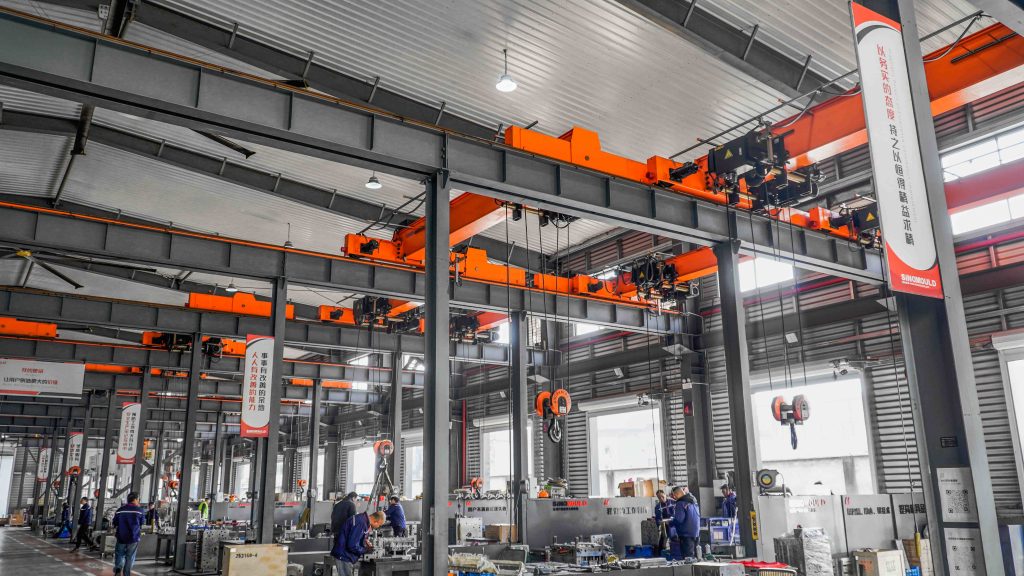
SINO’s automotive mould manufacturing business covers moulds for automotive interior and exterior trim, powertrain systems, chassis structural components, and new energy three-electric systems (battery, motor, electronic control), possessing the following core capabilities:
1. Complex Large Mould Technology
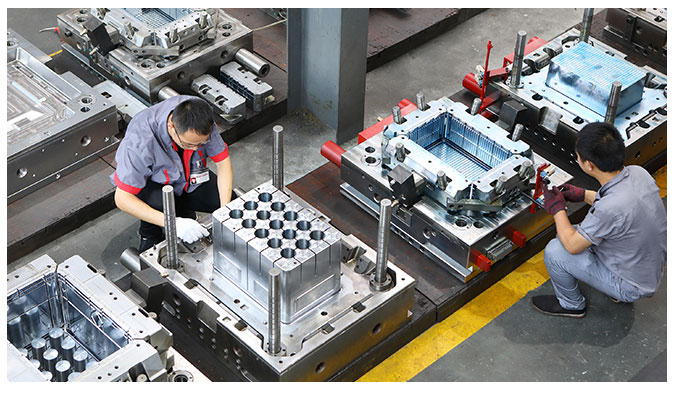
For large exterior trim moulds like automotive bumpers and door panels, we employ a "integrated mould base + zoned temperature control" design, equipped with intelligent hydraulic core-pulling systems. This enables single-shot moulding of ultra-large parts up to 2600mm × 1900mm, with mould life exceeding 1 million cycles.
2. SFM Mucell Microcellular Foam Mould Technology
In areas requiring both strength and lightweighting, such as internal structural components, SINO has independently developed "microcellular foam mould" technology. We have achieved breakthroughs in various technical difficulties and key points for microcellular foam moulds for medium-to-large structural parts, reducing cycle times to under 45 seconds. For example, in an integrated rear floor mould developed for a new energy vehicle manufacturer, CAE simulation optimized the rib layout, solving the strength insufficiency problem of traditional splice processes. The microcellular foam technology achieved a 15% weight reduction while simultaneously increasing production efficiency by 30%.
3. High-Gloss Mould Technology
Focusing on the lightweighting needs of new energy vehicles, we have developed Carbon Fiber Reinforced Polymer (CFRP) moulds. Notably, battery housing moulds utilize "high-gloss, weld-line-free" moulding technology. Through mirror-polished cavities and closed-loop rapid heating/cooling systems, they achieve a weld-line-free surface on battery housings, enhancing heat dissipation performance.
Automotive Part Injection Moulding:
Empowered by Intelligent Manufacturing,
Ensuring Efficient and Stable Production
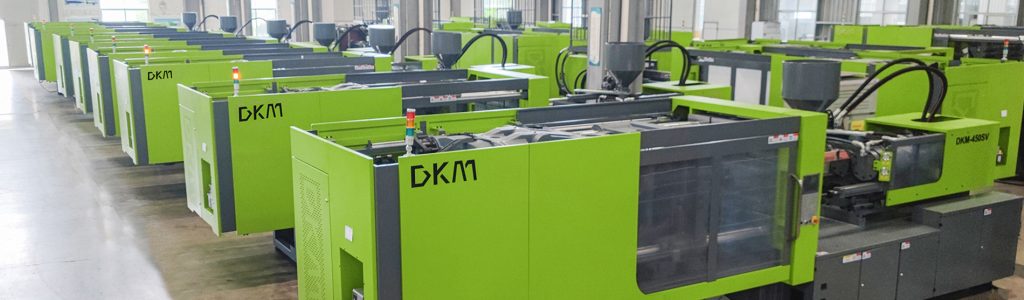
SINO's injection moulding business, centered on "lean production + intelligent control," creates flexible production lines. Key features include:
1. Full-Process Automated Production
Production lines are equipped with ABB 6-axis robots, automatic gate cutters, and vision inspection systems, enabling unmanned operation from raw material feeding to finished product packaging. The MES system collects over 200 parameters in real-time (injection pressure, temperature, cycle time, etc.), combined with AI algorithms to predict equipment failures. This reduces downtime by 40% and achieves production efficiency 25% higher than the industry average.
2. Material and Process Innovation
Addressing automotive lightweighting and environmental requirements, we extensively apply bio-based plastics, recycled plastics, and long-glass-fiber reinforced materials. For instance, using 30% glass-fiber reinforced PP material for automotive door panel carriers (replacing traditional ABS) achieves a 20% weight reduction and 12% cost saving. Simultaneously, "microcellular foam injection moulding" technology reduces part density by 10-15% while maintaining structural strength, further optimizing overall vehicle energy consumption.
3. Rigorous Quality Control System
A "three-level inspection" standard is established: First articles undergo full dimensional inspection using CMMs (accuracy ±0.01mm). In-process, online vision inspection systems monitor appearance defects (e.g., sink marks, flash) in real-time. Final inspection includes performance tests for temperature resistance, impact resistance, and aging resistance, ensuring products comply with IATF 16949 and customer-specific standards (e.g., VW PV3900, GM GMW14229).
Customer Value: Reducing Costs,Increasing Efficiency, Accelerating Product Launch
SINO's integrated service delivers multi-dimensional value to customers:
Shortened Development Cycles:
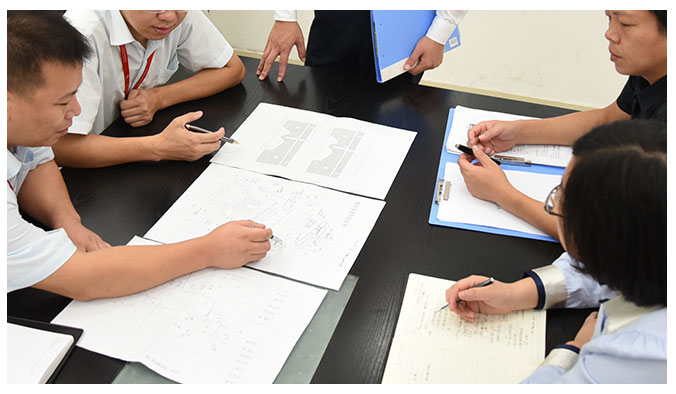
Collaborative development of mould and moulding optimizes the traditional sequential process ("mould manufacturing → trial → adjustment") into parallel engineering, reducing the new product cycle from design to mass production by 30-40%.
Reduced Overall Costs:
Integrated services minimize communication costs between links. Improved matching between mould and moulding process reduces the number of trial shots from the industry average of 5-8 times to 2-3 times, lowering overall costs by 15-20%.
Guaranteed Quality Traceability:
Full traceability from mould design drawings to injection moulding production data. Our proprietary production management system automatically captures and stores key parameters, meeting the automotive industry's stringent requirements for quality responsibility traceability.
Future Outlook:
Focusing on New Energy and Intelligence
Facing the electric and intelligent transformation of the automotive industry, SINO is strategically focusing on:
1.Core Components for New Energy Three-Electric Systems: Developing moulds and moulding technologies for battery pack housings, motor controller enclosures, and hydrogen fuel cell bipolar plates. Strategic cooperation has already been established with leading domestic new energy vehicle manufacturers.
2.Intelligent Connected Components: Expanding into high-precision injection moulded parts like AR-HUD optical components and millimeter-wave radar housings. Utilizing optical-grade PMMA materials and In-Mould Decoration (IMD) processes to meet the demands of intelligent driving.
3.Green Manufacturing: Promoting the construction of photovoltaic rooftops and waste heat recovery systems, aiming for carbon neutrality in the production process by 2025. Simultaneously developing 100% recycled material injection moulding technology to assist customers in achieving their ESG goals.
SINO adheres to the philosophy of “Precision Manufacturing, Collaborative Innovation.” Through our integrated service for automotive moulds and part injection moulding, we provide core support for the high-quality development of the automotive industry, committed to becoming a strategic partner for global automotive manufacturers.