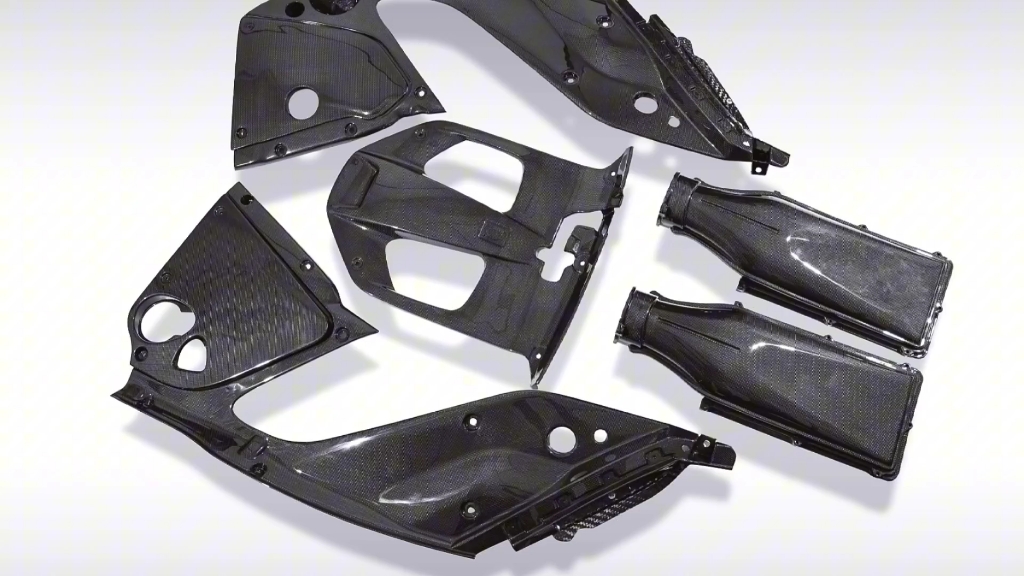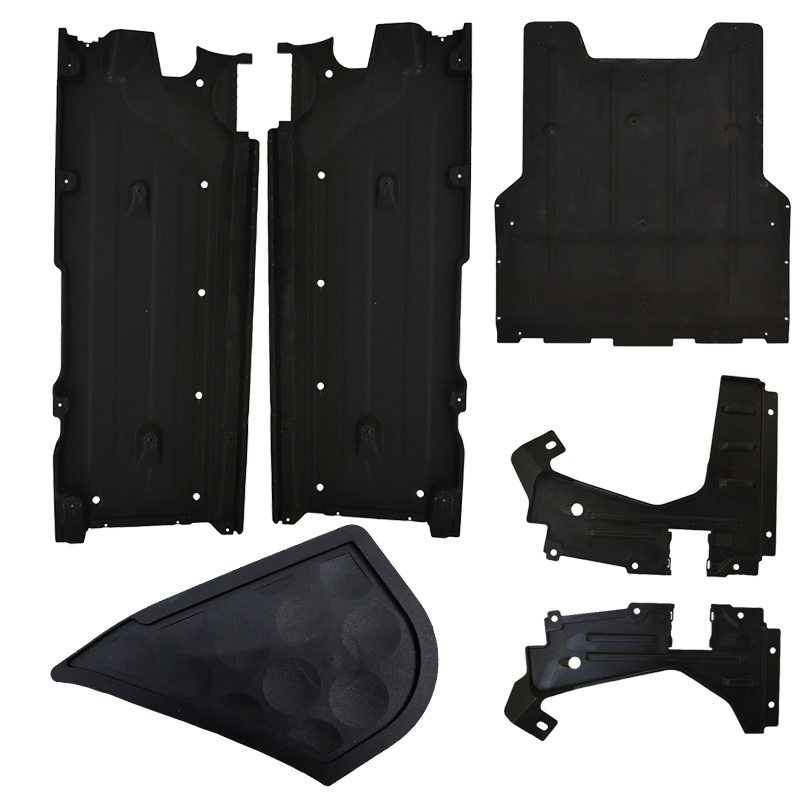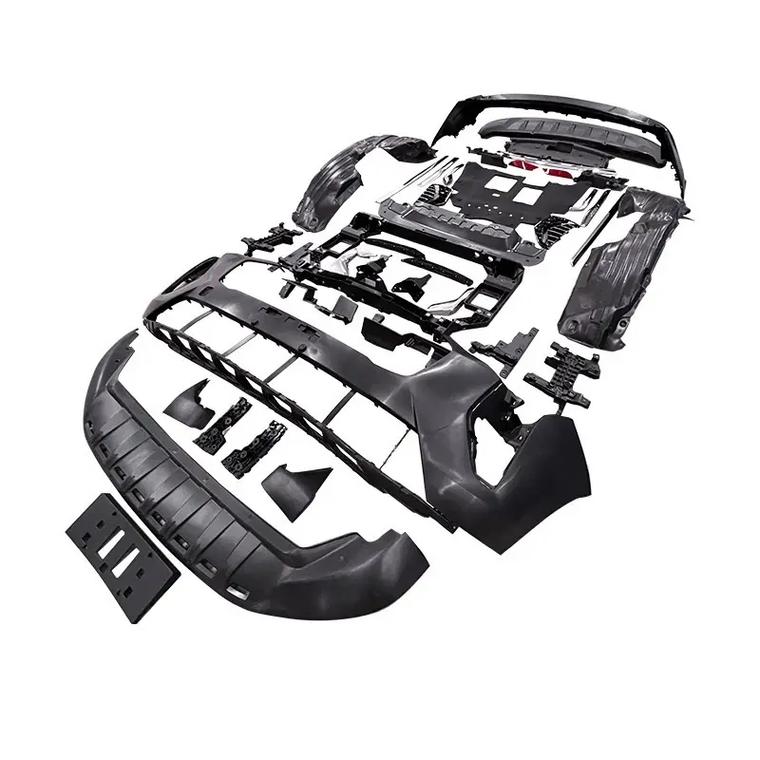
Carbon Fiber & Fiberglass Composite Mould
Carbon Fiber & Fiberglass Composite Mould Quality Essentials
Given the severe wear and chemical corrosion that carbon fibre and glass fibre reinforced composites impose on mould cavities during forming, SINOMOULD has established a stringent durability quality control system specifically for fibre‑reinforced moulds:
- Ultra‑high hardness wear‑resistant steel selection and cryogenic treatment
To resist the high‑pressure abrasive flow of fibre fillers on the mould gate and cavity, the core moulding components are made of high‑alloy tool steel that has undergone vacuum heat treatment and –120°C cryogenic treatment – abandoning conventional steels. By improving the uniformity of matrix hardness and eliminating retained austenite, the mould surface maintains a mirror‑grade finish without erosion grooves even after one million cycles under high‑fibre‑content impact.
- High‑hardness PVD coating for cavity surface strengthening
To further resist the characteristic wear and sticking of glass/carbon fibre composites, all melt‑contacting parts are coated with single‑layer or multi‑layer high‑hardness PVD coatings. The extremely low friction coefficient of these coatings not only greatly extends the service life of the mould under extreme wear conditions, but also perfectly solves the stubborn sticking problem of thermosetting carbon fibre resins.
- Anti‑corrosion structural design for highly corrosive thermosetting resins
For the corrosive gases released by resins during carbon fibre compression moulding, the mould parting line and venting system are made of S136 ESR powder metallurgy stainless steel or a high‑nickel alloy anti‑corrosion steel grade. Critical clearances such as venting slots and ejector pin mating holes are precisely passivated for rust prevention, completely eliminating the traditional problems of galling, premature mould failure, and product contamination by black spots caused by corrosion rust.
- Thermal balance and micro‑deformation control under high temperature and high pressure
To cope with the long‑term high‑temperature working environment (150°C–200°C) of carbon fibre moulds, a graded partitioned heat‑dissipation structure is designed inside the mould, and thermo‑mechanical coupling simulation is performed using finite element analysis. With topologically optimised thermal insulation plates and multi‑point independent temperature control, the temperature variation between working layers is minimised, preventing clamping force loss and uneven curing caused by differential thermal expansion.
Carbon Fiber & Fiberglass Composite Mould Machining Essentials
Machining high‑hardness wear‑resistant steel while accommodating the forming characteristics of composite materials imposes high demands on precision manufacturing. SINOMOULD’s carbon fibre / glass fibre mould machining techniques are as follows:
- High‑speed milling and micron‑level grinding of ultra‑hard materials
For post‑quenching, extremely high‑hardness high‑alloy tool steel, 5‑axis high‑speed machining centres with ultra‑hard cutters perform direct dry milling. When finishing high‑precision connector or structural cavities for glass‑fibre‑reinforced nylon, CNC jig grinding ensures that ejection causes no galling under high glass‑fibre content.
- Precision EDM and recast layer removal
For complex sharp corners and deep, narrow ribs that cannot be directly milled, high‑precision graphite electrode EDM is used. After EDM, thorough micro‑particle blasting and electrolytic polishing are performed to completely remove the brittle white layer and micro‑cracks created by EDM, eliminating the risk of early cracking under high‑pressure fibre rolling friction.
- Enhanced protection machining of parting lines and venting slots
To address the high flash tendency of carbon/glass fibre moulds, all locking and guiding structures are machined with precision boring and wire EDM. Laser micro‑textured friction‑increasing and fibre‑trapping grooves are precisely machined on the mould parting line, effectively preventing fibre debris from being pressed into the parting line and crushing it, maintaining flash‑free sealing life of the cavity under extreme conditions.
- Rigorous dynamic mould trial and wear‑coating validation
After final assembly, the mould must undergo a full‑load dynamic trial on the specified injection or compression moulding machine using the customer’s actual high‑fibre‑content material. Key tests include the adhesion strength of the PVD coating and the uniformity of its coverage under high‑shear heat. Shrinkage differences caused by fibre orientation are also measured, and pick‑and‑place and ejection timings are continuously optimised. Ultimately, a durable mould ready for high‑volume mass production is delivered.